
Our second exhibit is a paragraph. It sits in the uninsured motorist section of a standard Florida auto policy, runs about forty words, and has ended more Florida injury claims than any jury in the state.
It goes by several names. The household exclusion. The family vehicle exclusion. The owned but not insured exclusion. Whatever it is called, it says a version of this: uninsured motorist coverage does not apply to bodily injury sustained while occupying, or struck by, a vehicle owned by you or a resident relative that is not insured for uninsured motorist coverage under this policy.
Read it once and it sounds like boilerplate. Read it twice and you notice it is aimed at your own driveway.
The scenario, which is not unusual
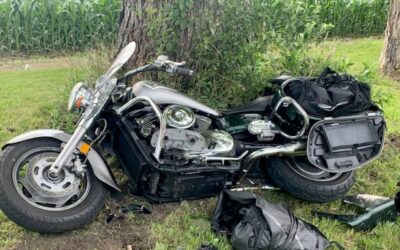
A Spring Hill household has two vehicles on the family auto policy, both with good uninsured motorist limits. There is also a motorcycle, or a work truck, insured separately on a bare bones policy with no uninsured motorist coverage, because that policy was bought to satisfy a lienholder.
A driver with no insurance runs a light on Spring Hill Drive and hits the motorcycle. The rider assumes the family policy’s uninsured motorist coverage is there. It is not. He was occupying a vehicle he owned that was not insured for uninsured motorist coverage under that policy, and the exclusion does exactly what it says.
Why courts uphold it
The rationale, endorsed by the Florida Supreme Court, is that a vehicle cannot be both insured and uninsured under the same policy. You cannot decline to buy uninsured motorist coverage for a particular vehicle, decline to pay the premium, and then claim that coverage anyway from a different vehicle’s policy after you are hurt on it.
Sound as insurance economics. Invisible to normal people, who reasonably believe a policy covering their family covers their family.
The other half: when the household policy does protect you
The exclusion is narrow, and people over apply it in the wrong direction, which costs them money too. A Class I insured, meaning the named insured and resident relatives of the household, carries uninsured motorist coverage with the person, not the car. If you are a resident relative on a household policy, that coverage generally follows you as a passenger in a friend’s vehicle, on a bicycle on Cortez Boulevard, as a pedestrian struck in a parking lot, and in a rental car.
The exclusion bites only when the vehicle involved is one you or a resident relative owns and did not insure for uninsured motorist coverage on that policy. Outside that pattern, the household policy is usually a live source of coverage nobody looks for.
Resident relative is a fight, not a formality
Because so much turns on it, insurers litigate the phrase resident relative hard, in both directions. A person is a resident relative when the exclusion helps them, and is not when coverage would help you.
Courts look at facts, not labels. Where the person sleeps. Whose address is on the license and the registration. Where mail goes. Whether the arrangement was meant to be permanent. College students, adult children who moved home during a divorce, and grandparents in a converted garage are all common battlegrounds, and the answer can be worth six figures.
The audit, and it is genuinely twenty minutes
Take out every declarations page in the household, including the motorcycle, the work truck and the car titled in a parent’s name. For each, answer one question: does it have uninsured motorist coverage, and at what limit.
If any vehicle is missing it, everyone who might ride in or on that vehicle has a hole no other policy will fill. Then ask your agent, in writing, whether your coverage is stacked or non stacked, and what it would cost to change both answers.
The Fine Print Museum has no gift shop. It has exhibits, and this one is on loan from a Hernando County family who found out the hard way. Ask a Spring Hill car accident lawyer what your household policies cover before you need the answer, not after.
External legal resource: Florida Statutes, section 627.727 (Uninsured and Underinsured Motorist Coverage)
—
Injured in a Collision? Make the Right Decision.
A car crash can leave you overwhelmed, injured, and unsure what to do next. But you do not have to figure it out alone.
If you were hurt in a Florida car accident, contact Brijbag Law for a free consultation.
Brijbag Law
In a Collision? Make the Right Decision.
Call: (352) 358-5880
No pressure. No upfront cost. Just answers.