A hurricane does not have to make landfall in Hernando County to make your drive home dangerous. Heavy rain can reduce visibility, leave water across a familiar road, and turn a routine stop at the grocery store into a fall on a wet entrance floor.
As Hurricane Isaias moves through the Gulf, people in Spring Hill, Brooksville, and Weeki Wachee should keep watching local conditions. The current forecast points toward the northern Gulf Coast rather than a landfall in our area, with parts of the Florida Panhandle facing more direct impacts. That forecast can change, and a storm’s effects can extend well beyond its center.
For our neighbors here, the immediate concern is taking wet roads and other local hazards seriously. If an injury occurs, the legal question is whether someone failed to take reasonable precautions under the circumstances.
What the current storm forecast means for Hernando County
The National Hurricane Center’s October 8 morning advisory forecasts Isaias reaching the northern Gulf Coast late Friday or early Saturday. It identifies heavy rainfall and flooding risks extending into the Florida Panhandle. Check the latest National Hurricane Center updates.
The National Weather Service in Tampa Bay is also reporting widespread showers, possible locally heavy rain, and coastal flooding concerns along portions of the west coast. Earlier state weather guidance identified a stalled front contributing to rain across the peninsula. Follow the local National Weather Service forecast.
That distinction matters. Not every downpour here comes directly from Isaias, but a wet road requires the same caution regardless of what produced the rain. Follow local alerts and road closures rather than relying only on a hurricane’s projected landfall location.
Driving in heavy rain around Spring Hill
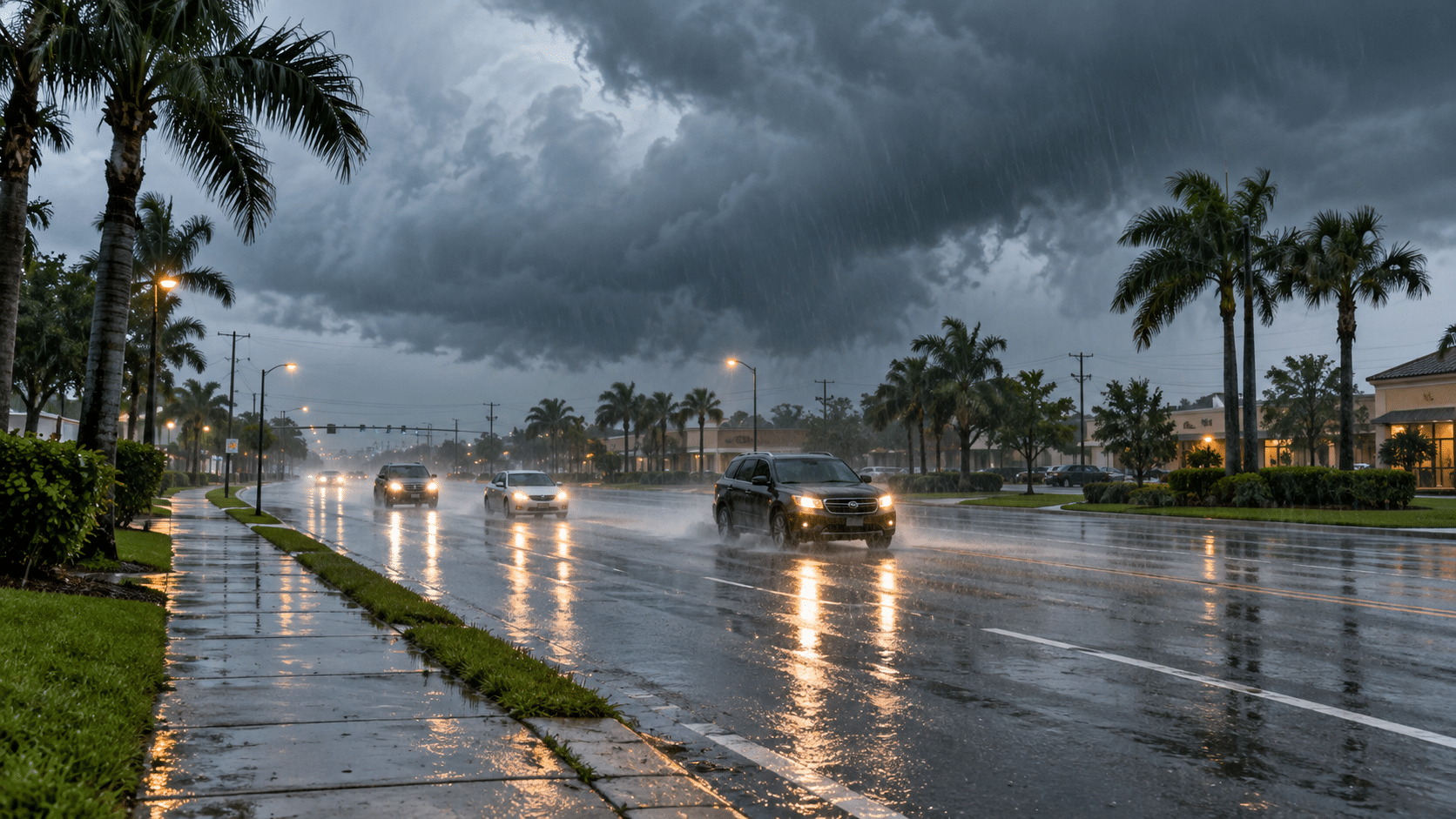
Whether you are traveling on US 19, Spring Hill Drive, State Road 50, or the Suncoast Parkway, adjust your driving when visibility or traction changes. A route you know well can look very different through heavy rain.
- Reduce your speed and leave more room behind the vehicle ahead. Wet pavement makes it harder to stop and control your vehicle.
- Turn on your headlights. Florida law requires vehicle lighting during rain, smoke, or fog. Do not assume your automatic lights have switched on.
- Avoid flooded roads and obey barricades. You may not be able to judge the water’s depth or see damage beneath it.
- Watch carefully for pedestrians and cyclists, particularly near intersections and parking lots.
- If you cannot see well enough to continue safely, find a safe place away from moving traffic to wait. Delay optional trips when conditions are dangerous.
Florida Statutes section 316.217 addresses required vehicle lighting.
For additional preparation and travel guidance, see NHTSA’s severe weather driving advice.
Who may be responsible for a car accident in the rain
Rain is a condition drivers must account for. Its presence does not automatically excuse a collision, and it does not automatically establish that a driver was negligent.
Under Florida Statutes section 316.183 drivers must use a speed that is reasonable and prudent for actual conditions and reduce speed when weather creates a special hazard. Traveling at the posted speed limit may still be unsafe during a heavy downpour.
For example, if a driver continues following closely when rain sharply reduces visibility and then hits the vehicle ahead, the investigation should examine that driver’s speed, following distance, and ability to react. Saying the road was wet does not answer those questions.
A rain-related car accident in Spring Hill requires attention to the specific evidence. Photographs, witnesses, dashcam video, and the vehicles’ condition can help explain how a crash occurred. Responsibility and available insurance coverage depend on the facts.
Wet business entrances and slip and fall injuries
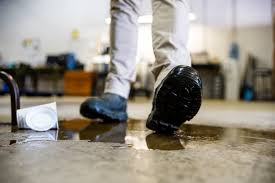
Heavy rain can also create hazards inside stores, restaurants, and other businesses. Water tracked through an entrance may collect on a smooth floor, especially during a prolonged downpour.
For a slip and fall involving a temporary substance such as water in a Florida business, section 768.0755 requires proof that the business had actual or constructive knowledge of the dangerous condition and should have taken action to remedy it. Constructive knowledge may be shown by evidence that the condition existed long enough to be discovered through ordinary care, or occurred regularly and was foreseeable.
Relevant evidence may include recurring water accumulation at the same entrance, employee observations, inspection records, and surveillance footage. A fall during rain does not, by itself, establish a claim. The condition of the floor and what the business knew are central to the analysis.
What to do after an accident during stormy weather
Get to safety first and call 911 for an emergency. Seek appropriate medical care for injuries. Photographs and paperwork can wait until you can collect them without putting yourself or anyone else in danger.
- For a collision, exchange driver and insurance information and obtain the crash report details.
- For a fall, notify the business and ask that it document the incident. Request a copy if available.
- When safe, photograph the scene, vehicle damage, standing water, lighting, or the floor condition. Record the location and time.
- Save witness contact information, dashcam footage, relevant messages, and receipts for expenses.
- Keep medical records and promptly notify the appropriate insurer. Ask an attorney about preserving video before it is overwritten.
Questions about accidents during heavy rain
Can someone be responsible if their car hydroplanes
Possibly. Hydroplaning describes a loss of traction; it does not resolve fault. A review may consider speed, road conditions, tire condition, and whether the driver took reasonable precautions.
Is a business automatically liable for a wet floor during rain
No. For a claim governed by section 768.0755, the injured person must establish the business’s actual or constructive knowledge of the condition, along with the other elements of the claim.
Should I still take precautions if the hurricane is headed elsewhere
Yes. Base your decisions on conditions and official alerts where you are. Rain, flooded roads, and coastal hazards may affect communities away from the landfall location.
Speak with a Spring Hill personal injury attorney
If you or someone in your family is injured in a car accident or a fall during this rainy weather, Brijbag Law can review what happened and explain your options. Our firm serves Spring Hill, Brooksville, Weeki Wachee, and surrounding Hernando, Citrus, and Pasco County communities.
Call (352) 358-5880 or contact Brijbag Law for a free injury case evaluation.
Our Spring Hill office is located at 5329 Commercial Way, Suite 102, Spring Hill, FL 34606.
This article provides general information and is not legal advice. Weather information reflects the October 8, 2026 morning updates cited above. Consult current official forecasts and local emergency instructions before making travel or safety decisions.